
Gin Rummy: Classic Card Games
Tripledot Studios LimitedCard
4.71.09K Reviews
- Version
- 1.07.00
- Installs
- 1.00M
- Age Rating
- Everyone
Screenshots
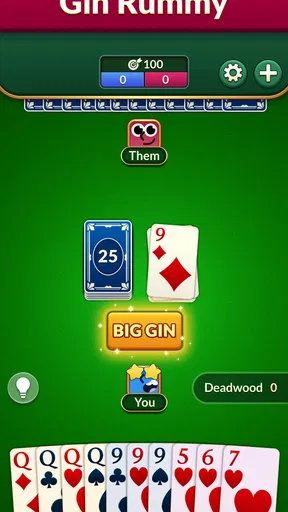
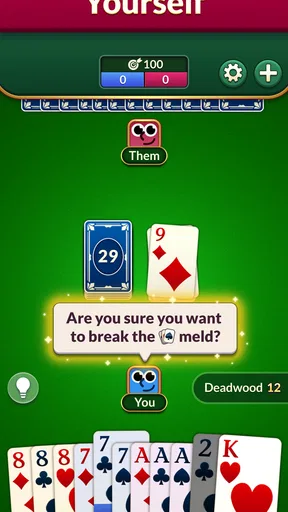
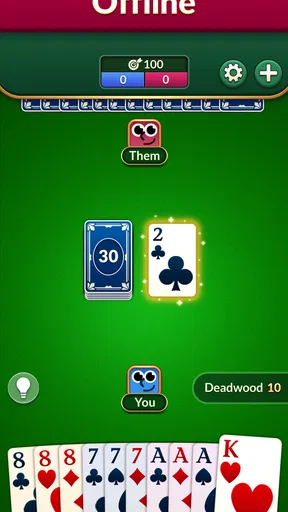

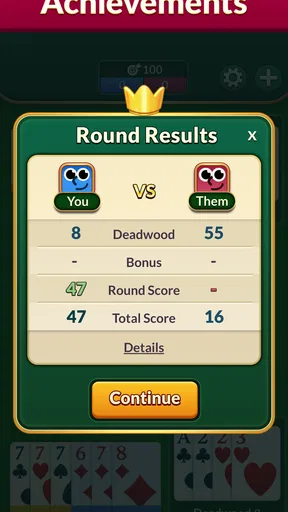
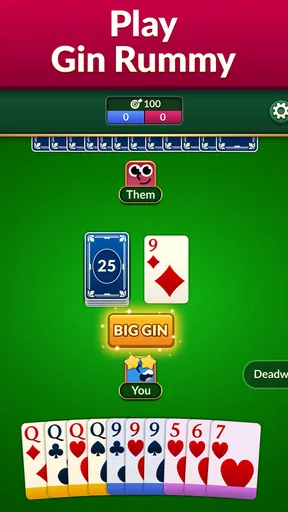
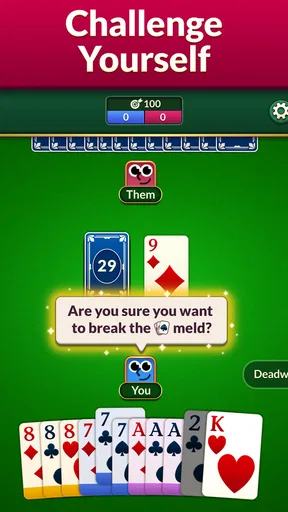
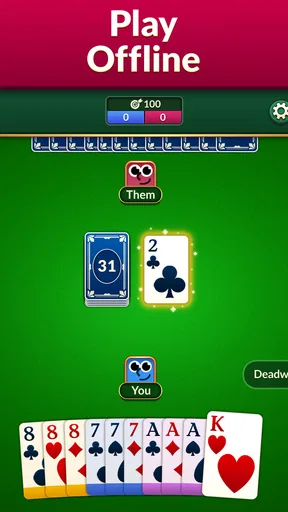
Our Review of Gin Rummy: Classic Card Games
 Analysis by Appyee
I spent time with Gin Rummy: Classic Card Games as a compact way to play one of the most recognizable two-player card games on a phone. It is free, rated for Everyone, and developed by Tripledot Studios Limited, so the basic pitch is easy to understand: open the game, arrange your hand, and look for the best moment to knock or go gin. What matters in practice is whether that familiar structure feels comfortable on a small screen, whether a quick session is genuinely convenient, and whether the game offers enough polish to keep me returning after the novelty wears off.
My overall impression is positive, especially if you already know how Gin Rummy works or want a straightforward digital version to learn at your own pace. It does not turn the card game into an oversized adventure with unnecessary distractions. Instead, the appeal comes from reading the discard pile, remembering what has been played, and deciding when to protect a promising hand rather than chase a perfect one. That simplicity is also the main limitation: players seeking a deep competitive ladder, a large social community, or a broad collection of modes may find the experience narrower than expected.
How the current version feels to play
The game belongs firmly in the card game category, but Gin Rummy rewards a different mindset from fast matching games. A turn can be over quickly, yet every discarded card gives information to the other player. I found myself paying attention not only to the cards in my hand, but also to which suits and ranks the opponent seemed willing to collect. That makes a short round feel more thoughtful than its simple rules suggest.
The basic rhythm is easy to settle into. I draw, decide whether the new card improves a possible set or run, and discard something that is unlikely to help. The difficult part is resisting the urge to keep too many possibilities alive. Holding several almost-useful cards can feel safe, but it often leaves the hand cluttered while the opponent quietly builds a cleaner combination. The strongest turns usually came from making an early decision about which patterns deserved attention.
On a phone, clarity matters more than decoration. Cards need to be readable at a glance, and the active turn needs to be obvious enough that I do not tap around wondering what the game expects next. This kind of interface is at its best when it stays out of the way. I prefer being able to concentrate on card relationships instead of navigating through layers of menus before every round.
The game is particularly suitable for small breaks. A round can fit into a commute, a waiting room, or a few quiet minutes before bed without demanding the long commitment of a strategy game. That does not mean every session feels equally satisfying. If I am tired, I can play mechanically and miss the clues in the discard pile; when I am alert, the same rules create a surprisingly engaging little puzzle.
One useful habit is to treat the discard pile as a record of the opponent’s priorities rather than as a simple source of cards. If a player repeatedly ignores a suit, that may be a reason to avoid feeding it useful cards. On the other hand, a single pickup should not be treated as absolute proof of a plan. I found better results by collecting several clues before changing my own strategy.
Learning the game without feeling lost
For newcomers, Gin Rummy can seem more complicated than it really is because the goal involves both building combinations and reducing unmatched cards. The app works best for learning when I take a few rounds slowly instead of trying to win immediately. I focus first on recognizing three-card groups and consecutive cards in the same suit, then add more attention to timing and score decisions.
A practical beginner approach is to avoid holding cards solely because they might become useful later. If two cards are far apart and have no visible connection to the rest of the hand, keeping both can be expensive. I usually choose the card that is least likely to improve a plausible combination and discard it, while watching whether the opponent immediately takes something similar. That small routine teaches the central lesson of Gin Rummy: information and flexibility are valuable, but unused possibilities also carry a cost.
Experienced players may enjoy using the game as a mental warm-up. I would not treat a phone opponent as a complete replacement for playing against a person who knows my habits, because human opponents can bluff, vary their pace, and remember previous rounds in a more personal way. Still, a digital match is useful for practicing hand evaluation and learning to make decisions under a little pressure.
What the release and version details tell me
The game was released on January 23, 2025, and the current version is 1.07.00. Those details place it in a relatively early stage of its product life rather than presenting it as a long-established platform with years of visible evolution. I see that as a reason to judge the current play experience on its own merits while keeping expectations measured about how extensive future changes might be.
Its minimum requirement is Android 6.0, which makes the compatibility target broad enough for people using older Android phones. That is helpful for a simple card game, where demanding graphics are not the point. I would still check that the phone has enough everyday responsiveness for comfortable taps and transitions, particularly if it is an older device with limited free storage or background activity.
The version number suggests that the developer has already moved beyond the first release build, but a version label alone does not tell me how dramatically the game has changed. I would not assume that every update brings a new mode or a major rules adjustment. For existing players, the important question is whether the current build remains smooth and understandable, not whether the number looks large.
Tripledot Studios Limited has chosen a familiar game rather than an obscure card variant, which gives the app an immediate advantage: many users can start playing without learning a completely new system. At the same time, that choice raises the standard. Players know what Gin Rummy should feel like, so awkward controls, unclear scoring, or interruptions would stand out more than they might in a brand-new concept.
Why the audience response matters, and what it does not prove
The game has an average rating of 4.7 from around 7.2 thousand ratings, with about 1.1 thousand written reviews. It has also passed 1 million installs. Those figures indicate that the app has found a substantial audience and that many players are satisfied enough to rate it positively. I see that as encouraging evidence for the core experience, especially because card games depend heavily on whether the interface feels natural during repeated turns.
Popularity does not automatically mean it is the right choice for every player. A large audience can include people who only wanted a few casual rounds, while a dedicated Gin Rummy player may care about details that a general rating does not reveal. I would use the strong reception as a reason to try the game, not as a substitute for checking whether its style matches my own expectations.
For someone deciding whether to install it, the most relevant combination is its free price and Everyone content rating. That makes it approachable for family use and low-risk experimentation. The trade-off is that a free game may be designed around a broader casual audience rather than tournament-minded players. If I want a focused practice tool with extensive statistics or a serious competitive environment, I would compare it with a more specialized alternative before settling in.
How it fits into an everyday routine
Imagine having ten minutes while waiting for an appointment. I can start a round, make a few deliberate decisions, and stop without needing to remember a complicated campaign or manage a long-term character. That is where this game makes the most sense to me. It turns an otherwise empty pause into a small exercise in memory, probability, and restraint.
Another useful situation is playing beside someone who already understands cards but does not want a loud or complicated game. Gin Rummy is naturally compact, and the digital format removes the need to carry a deck or find a flat surface. I would not describe it as a replacement for sitting across from a friend with physical cards, but it is a convenient way to keep the structure available when a real deck is not.
It can also help someone rebuild confidence after forgetting the rules. I recommend starting with the goal of improving one decision per round: identify a dead card earlier, notice a useful discard, or avoid revealing too much information. That approach is more rewarding than judging every hand only by whether it ends in a win.
One less obvious use is as a concentration reset. Because the game is quiet and turn-based, I can use a short match to shift attention away from endless scrolling. The benefit depends on playing intentionally; rushing through turns turns the experience into another automatic habit. I get more from it when I pause briefly before each discard and ask what information that choice gives away.
Where it stands against other ways to play
Compared with a physical deck, the app is more convenient and less social. A real table gives players room to talk, read body language, and create their own pace. The phone version wins when I am alone, traveling, or simply do not have cards nearby. It also removes setup and cleanup, which sounds minor until I want to play only one quick round.
Compared with broad card-game collections, this title is more focused. A collection app may offer solitaire, poker-style games, or several variants in one download, making it better for someone who wants constant variety. This game is a better fit when I specifically want Gin Rummy and would rather spend time improving at one ruleset than switching between unrelated games.
Compared with multiplayer-first card platforms, its appeal is its lower social pressure. I can play without organizing a match or waiting for a friend to be available. The downside is that a dedicated multiplayer service may provide a stronger sense of competition and more reasons to return with the same group. If shared play is the main purpose, I would choose the platform that makes connecting with real opponents easiest rather than assuming a focused solo card game can fill that role.
There is also a difference between this kind of game and a puzzle app. A puzzle usually presents a designed challenge with a known solution, while Gin Rummy asks me to make the best choice from incomplete information. That uncertainty is what keeps repeated rounds interesting, but it can frustrate players who prefer guaranteed progress or clearly staged objectives.
Small decisions that improve the experience
My first tip is to separate a promising combination from a merely attractive pair. Two cards that look close to forming a run can tempt me to wait too long, especially when holding them blocks a better set elsewhere in the hand. I now ask whether the missing card is realistically worth waiting for, based on what has already appeared, instead of treating every near-match as equally valuable.
Second, I avoid discarding a card just because it is high. Reducing unmatched points matters, but a high card can sometimes be part of a strong developing structure. The better question is whether it has a credible role in the hand and whether keeping it reveals less than discarding an apparently harmless card. This is a small distinction, but it prevents automatic play.
Third, I use the opponent’s pickups to adjust my discard choices without overreacting. If the other player takes a card from the pile, I assume that rank or suit may now be relevant to them, but I do not abandon my entire plan after one clue. Waiting for a pattern protects me from becoming so defensive that I stop building my own hand.
Fourth, I treat the end of a round as a review opportunity. I look back at the first card I discarded and consider whether I had enough information to make that choice. This is more useful than simply remembering the final result, because it identifies whether my problem was poor timing, weak hand organization, or a failure to notice what the opponent was collecting.
Finally, I play shorter sessions when my attention is poor. Gin Rummy rewards observation, and several careless rounds can make a good game feel dull. Stopping after a focused match is often better than continuing until the decisions become automatic.
Where the current experience may fall short
The narrow focus is the clearest limitation. If I want a variety of card games in one place, this app may feel restrictive after the first few sessions. Gin Rummy has meaningful depth, but its basic turn structure remains familiar, and players who need constant novelty may prefer a larger collection or a more elaborate strategy title.
It is also not the ideal choice for someone whose priority is a strong face-to-face social experience. Digital convenience cannot reproduce the conversation, pauses, and friendly tension of a shared physical table. Even when the rules are identical, the emotional texture is different.
New players should be prepared for a learning curve that is subtle rather than dramatic. The rules can be understood quickly, but good decisions take longer. Early losses may feel confusing because the mistake often happened several turns before the final count. I recommend giving the game enough time to reveal that relationship between discards, information, and end-of-round risk.
Players who expect a highly competitive training environment should also keep their expectations realistic. A casual phone game can help with fundamentals, but serious improvement may require playing varied human opponents, recording decisions, or studying formal strategy separately. This app is useful practice, not automatically a complete coaching system.
What I would watch as the game develops
Because the release is recent and the current version is 1.07.00, I would pay attention to how Tripledot Studios Limited handles future refinement. The most valuable improvements would be the ones that make rounds easier to understand without adding clutter: clearer feedback around legal actions, smoother hand organization, and sensible ways to help beginners learn why a decision matters.
I would also watch whether the game remains welcoming to casual users while giving experienced players reasons to continue. That balance is difficult. Too many additions could distract from the clean card-table feeling, while too little evolution could make the app feel static once the basic strategy becomes familiar. The best direction would preserve the quick-round appeal and add depth only where it supports better play.
For existing users, updates are worth judging by practical effect rather than by version number. Does a round feel easier to follow? Are decisions more comfortable on smaller screens? Does returning to the game still feel immediate? Those are the changes I would notice during everyday use. I would not assume that every update transforms the product, but steady attention to these details could make a simple game last much longer.
My recommendation is straightforward. I would suggest this game to anyone who wants a free, focused way to play Gin Rummy on Android, especially for short solo sessions and relaxed practice. Its 4.7 average and audience of over 1 million installs make it an easy title to consider, but the real reason to try it is that the rules create more thought than the simple presentation suggests.
I would skip it if I need many different card modes, a strongly social multiplayer community, or a formal competitive training environment. For everyone else, it is a pleasant and accessible version of a classic pastime. The best reason to keep it installed is not flashy content, but the quality of the small decisions it asks me to make. When I want a quiet game that rewards attention without demanding a large time commitment, this is one I am happy to open.
Verdict
Strengths of Gin Rummy: Classic Card Games
- Simple rules make it easy for beginners to start playing.
- Quick matches fit well into short breaks or daily commutes.
- Offline play lets you enjoy games without an internet connection.
- Multiple difficulty levels provide a challenge as your skills improve.
- Clean card design keeps the board easy to read on small screens.
Limitations of Gin Rummy: Classic Card Games
- Ads may interrupt play, especially between completed rounds.
- Advanced players may find the computer opponents predictable.
- Limited social features reduce interaction with real players.
- Some features may require in-app purchases or a premium upgrade.
- Gameplay can feel repetitive after extended sessions.
Other Releases by Tripledot Studios Limited
View All
Woodoku - Wood Block Puzzle
Puzzle4.2

Get Color - Water Sort Puzzle
Puzzle4.8


Nut Sort: Color Sorting Game
Puzzle4.8
Similar Picks in This Category
View All
Solitaire - Classic Card Games
MobilityWare4.6

UNO!™
Mattel163 Limited4.3

Spider Solitaire: Card Games
MobilityWare4.6
Solitaire.com - Classic Cards
Tripledot Studios Limited4.7

Plants vs. Zombies™ Heroes
ELECTRONIC ARTS4.1

Hearthstone
Blizzard Entertainment, Inc.4.1
Frequently Asked Questions
What is Gin Rummy: Classic Card Games?
Gin Rummy: Classic Card Games is a digital version of the traditional two-player card game, designed for quick matches against computer opponents or, depending on the available mode, other players. The main objective is to arrange cards into sets and runs while minimizing unmatched cards, known as deadwood. It generally offers a straightforward interface suitable for both beginners and experienced card-game fans.
How do you play Gin Rummy: Classic Card Games?
At the beginning of each round, players receive cards and take turns drawing from the stock or discard pile before discarding one card. You try to form groups of the same rank and sequences of consecutive cards in the same suit. A round can end when a player knocks or achieves gin, and the final score depends on the opponent’s remaining unmatched cards and the bonuses awarded by the game rules.
Can beginners learn the rules easily?
Yes, the game is relatively accessible for newcomers because each round follows a consistent draw-and-discard structure. However, learning the basic rules is only the first step. Good play also requires remembering discarded cards, predicting which cards your opponent may need, and deciding when to knock. Players unfamiliar with Gin Rummy should begin with easier opponents and practice several short rounds.
Does Gin Rummy: Classic Card Games require an internet connection?
The connection requirements may vary according to the version and the features included by the developer. Single-player matches against computer opponents are often available offline, while online multiplayer, advertisements, leaderboards, cloud synchronization, or other connected features may require internet access. Before downloading, check the app-store description and test the game’s offline availability if playing without mobile data is important.
Is Gin Rummy: Classic Card Games free to download?
The game may be free to install, but free versions commonly include advertisements, optional purchases, or premium features. These can include removing ads, unlocking additional themes, accessing advanced modes, or receiving in-game benefits. Review the listing for the current pricing and purchase details before installing. Also remember that availability, advertising, and payment options can differ between Android and iOS versions.
Play our best games!


